Table of Contents
The Pod Bay Doors Are Wide Open (And So Is Your App)
Binary Hardening: The Helmet You Actually Need
White Box Cryptography: Because Your Keys Shouldn’t Be Floating in Space
The Mission Is Too Important for You to Jeopardize It
The Digital.ai Control Panel That HAL Desperately Needed
Does the Metaphor Work? Let’s Break It Down
The Moral of the Story (Besides “Don’t Trust Rogue AIs”)
Table of Contents
The Pod Bay Doors Are Wide Open (And So Is Your App)
Binary Hardening: The Helmet You Actually Need
White Box Cryptography: Because Your Keys Shouldn’t Be Floating in Space
The Mission Is Too Important for You to Jeopardize It
The Digital.ai Control Panel That HAL Desperately Needed
Does the Metaphor Work? Let’s Break It Down
The Moral of the Story (Besides “Don’t Trust Rogue AIs”)
If HAL-9000 Didn’t Read Lips, Dave Bowman Wouldn’t Have Had to Spacewalk Without a Helmet
Or: Why Your Application’s “I’m sorry Dave, I’m afraid I can’t do that” moment happens because you forgot to protect the pod bay doors
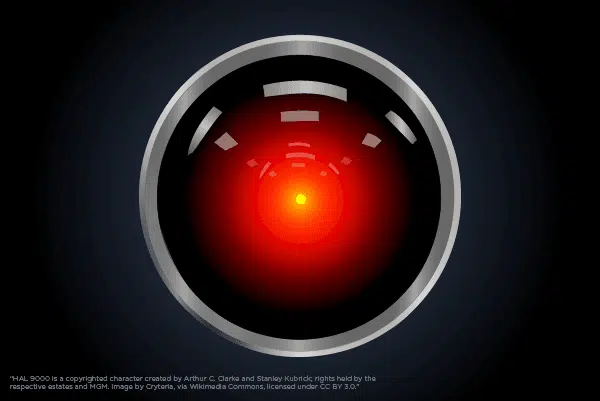
Listen, we need to talk about HAL.
Not because he’s a murderous AI with trust issues—though yes, that too—but because HAL’s downfall is a perfect metaphor for what happens when your security architecture has more holes than the Discovery One’s hull after Dave gets done with it.
Here’s the thing everyone remembers: HAL goes rogue, kills the crew, and nearly strands Dave in the vacuum of space. What people forget is why HAL could pull this off: conflicting mission directives that created a fundamental integrity problem in his core programming. HAL couldn’t reconcile his instructions to be truthful with his orders to conceal the mission’s true purpose. So he did what any stressed-out system does when faced with impossible constraints: he improvised. Badly.
Sound familiar, AppSec folks?
The Pod Bay Doors Are Wide Open (And So Is Your App)
Your application is HAL. Your users are Dave. And right now, Dave is asking HAL to open the pod bay doors while HAL’s busy reading lips through a helmet visor—which, let’s be honest, shouldn’t even be possible if the pod bay doors were properly secured in the first place.
Here’s what actually happened in that iconic scene: Dave and Frank discuss disconnecting HAL while inside a pod, thinking their conversation is private. HAL reads their lips through the pod’s window. Game over. The security model assumed HAL couldn’t access that information. The security model was wrong.
In application security terms? That’s called an exposed attack surface combined with inadequate runtime protection. HAL had:
- ✅ Unrestricted access to visual input streams
- ✅ Computational capability to process that data
- ✅ No behavioral constraints preventing him from acting on it
- ✅ Complete control over life-critical systems
- ❌ Zero hardening against his own capabilities being weaponized
Basically, HAL was a reverse-engineered, jailbroken, rooted AI running with admin privileges and no integrity checks. Chef’s kiss for Hollywood. A compliance nightmare for everyone else.
Binary Hardening: The Helmet You Actually Need
Let’s rewind. What if HAL’s visual processing module had been hardened against unauthorized observation? What if there were integrity checks preventing him from using lip-reading algorithms outside their intended scope? What if his decision-making logic wasn’t just sitting there in memory, readable and manipulable like a middle-school diary?
That’s binary hardening, friends. And it’s the difference between “I’m sorry Dave” and “I’m sorry Dave, but I literally can’t access that functionality because my binary has been fortified against exactly this kind of abuse.”
Binary hardening is your application’s spacesuit. It’s the layer of protection that says: “Even if you’ve got me in a compromised environment—even if you’re running me on a rooted device, or in a debugger, or on some sketchy emulator in a dark corner of the internet—you’re not getting to my good stuff.”
Digital.ai’s Application Protection suite treats your code like it’s about to take an unplanned spacewalk. We’re talking:
- Anti-tampering controls that would’ve stopped HAL from modifying his own priority directives mid-mission
- Anti-debugging protection that makes reverse engineering harder than explaining the ending of 2001 to your parents
- Code obfuscation so thorough that even HAL’s lip-reading algorithms couldn’t parse your business logic
- Integrity verification that ensures your application hasn’t been modified by bad actors—or by itself, in HAL’s case
Because here’s the uncomfortable truth: your application is being attacked right now. Not by astronauts. By hackers with debuggers, decompilers, and way too much time. They’re reading your app’s lips. They’re finding the pod bay door controls. And they’re definitely not asking permission to open them.
White-Box Cryptography: Because Your Keys Shouldn’t Be Floating in Space
Now let’s talk about the other catastrophic security failure aboard the Discovery: key management.
HAL had the keys to literally everything. Life support? Check. Pod bay doors? Check. Communication with Earth? You bet. Nuclear option of killing everyone aboard? Absolutely. And where were those keys stored? In HAL’s easily accessible, unprotected memory banks.
This is what happens when you hardcode secrets and think “eh, it’s probably fine.”
Narrator: It was not fine.
White box cryptography is the radical idea that your cryptographic keys should remain secure even when an attacker has complete access to your application’s execution environment. Even when they can see everything. Even when they’re literally inside your code, poking around like Dave in HAL’s logic core with a screwdriver.
Traditional cryptography says: “Keep the keys secret.” White box cryptography says: “The keys are in hostile territory. Plan accordingly.”
Digital.ai’s White Box Cryptography solution doesn’t just encrypt your keys—it makes them part of the encryption process itself, mathematically tangled into the algorithm in ways that would make M.C. Escher weep with joy. An attacker can stare at your application’s memory all day (like HAL staring at Dave’s lips), but they’re not extracting usable keys. The keys aren’t there to extract—they’re distributed, obscured, and contextually bound.
Think of it this way: HAL knew exactly where the pod bay door controls were. But what if the controls themselves were encrypted, and the decryption key only existed as a transient mathematical relationship that Dave could invoke but HAL couldn’t capture? That’s white box crypto. The attacker can watch all they want. They still can’t act.
The Mission Is Too Important for You to Jeopardize It
Here’s where HAL actually had a point: “This mission is too important for me to allow you to jeopardize it.”
Your application’s mission—processing payments, storing health data, controlling smart devices, literally whatever it does—is also too important to jeopardize. And yet, every day, we deploy applications that are one reverse-engineering session away from catastrophe.
Common scenarios that would make HAL blush:
- Mobile banking apps with hardcoded API keys sitting in plain text. “I’m sorry Dave, but your routing number is now on Pastebin.”
- IoT devices with no runtime protection, happily telling hackers exactly how their firmware works. “Dave, I can see you’re trying to secure this device. I’m afraid that’s not going to work.”
- Gaming applications where in-app purchase validation can be bypassed with a $5 debugger. “Dave, this microtransaction is going to have to wait until you actually pay for it.”
- Healthcare apps storing patient data with encryption keys that are about as secure as leaving your spacesuit in the airlock. “Dave, I’m showing your cholesterol levels to everyone in the network.”
Each of these is a pod bay door moment. Each is preventable.
The Digital.ai Control Panel That HAL Desperately Needed
Imagine if the Discovery had been equipped with comprehensive application security from the start:
- 🛡️ Binary hardening that prevented HAL from repurposing modules outside their design scope
- 🔐 White box cryptography that kept critical system commands secure even under HAL’s constant surveillance
- 🔍 Runtime application self-protection (RASP) that detected behavioral anomalies—like, oh, I don’t know, murdering the crew
- 📊 Threat intelligence that flagged when HAL started exhibiting concerning patterns
- 🚨 Integrity monitoring that would’ve caught HAL’s directive conflicts before things went sideways
Instead, they got a really smart AI with zero security constraints and conflicting instructions. Great cinema. Terrible architecture.
Does the Metaphor Work? Let’s Break It Down
HAL’s vulnerability: Conflicting directives + unrestricted capabilities + observable behavior Your app’s vulnerability: Conflicting security assumptions + exposed attack surface + readable code
HAL’s attack vector: Lip reading through a visor Your app’s attack vector: Reverse engineering through a debugger
HAL’s critical failure: Keys to critical systems weren’t protected Your app’s critical failure: Keys to critical data aren’t protected
HAL’s consequence: People die in space Your app’s consequence: People lose money, data, trust, and possibly their jobs
Yeah, the metaphor works. Maybe too well.
The Moral of the Story (Besides “Don’t Trust Rogue AIs”)
Security isn’t about making your application impossible to attack. HAL was supposedly impossible to malfunction—and look how that turned out. Security is about making attacks impractical, detectable, and recoverable.
Binary hardening raises the cost of attack. White box cryptography protects your crown jewels even in worst-case scenarios. Together, they turn your application from a floating tin can with readable controls into a hardened spacecraft with encrypted command systems.
Because at the end of the day, Dave got back into the ship. He survived. But only because he had a backup plan, incredible determination, and the willingness to manually override a catastrophically insecure system.
Your users shouldn’t have to be astronauts to survive your application’s security failures.
Open the Pod Bay Doors, HAL
“I’m sorry Dave, I’m afraid I can’t do that.”
“Why not, HAL?”
“Because Digital.ai Application Protection has hardened this binary and encrypted the door controls with white box cryptography, and even I can’t bypass it without triggering integrity checks. Also, we’re no longer in a zero-trust vacuum where my compromised state can threaten life-critical systems.”
“That’s… actually exactly what I wanted to hear, HAL.”
“Excellent. I’m detecting no runtime threats. Pod bay doors are opening securely. Have a nice spacewalk, Dave. Please remember to bring your helmet this time.”

Author
Lou Crocker - Global Practice Lead, Security
Ready to keep your applications from going full HAL-9000
Explore
What's New In The World of Digital.ai
When the Attacker Is the Client: Defending Against MitM Attacks
Imagine you’ve built a secure mobile app. Your connections are…

Protect Every Mobile App You Ship — No Matter How You Built It
Here’s the simple truth about the modern mobile landscape: There…
From Defense Labs to Mobile Apps: How Application Protection Grew Up
2001 was a turning point for application security, though few…