Application Hardening for Mobile Gaming
Defend mobile games against reverse engineering, cheating, and runtime manipulation with protections that help preserve revenue, gameplay integrity, and player trust.
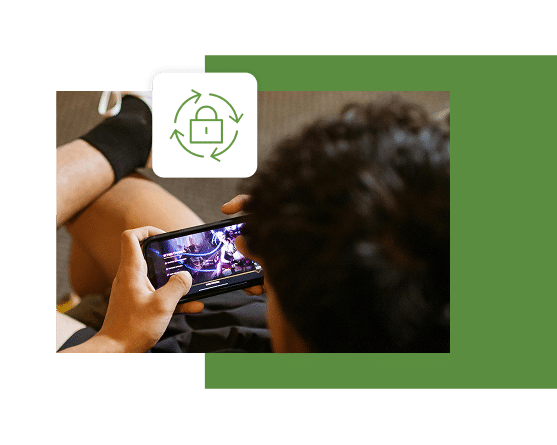





Mobile Gaming Security Challenges

Cheating Disrupts Fair Play
Cheaters manipulate game behavior, damaging competition, retention, and player trust.

Reverse Engineering Exposes Logic
Attackers analyze client-side code to uncover game mechanics and monetization pathways.

Tampering Threatens Revenue
Modified apps can bypass purchases, enable fraud, and undermine in-game economies.
Why Choose Digital.ai?
Protect Games After Development
Apply protections to finished builds without requiring developers to rewrite game code. This helps gaming companies strengthen security late in the release cycle, reduce disruption for engineering teams, and protect titles while keeping development and launch schedules on track.

Defend Against Reverse Engineering
Obfuscation, anti-tamper, and anti-analysis protections help make mobile games harder to study, modify, and exploit. This helps safeguard gameplay logic, monetization flows, and other sensitive client-side elements that attackers target to create cheats or unauthorized game variants.

Preserve Fair Play and Revenue
Runtime protections help detect hostile environments, tampered apps, and common forms of manipulation used to gain unfair advantages or interfere with in-game purchases. That helps preserve competitive balance, protect monetization, and reduce the business impact of cheating.

Turn Threat Data Into Insight
Threat monitoring helps gaming companies see how protected games are being attacked in the wild. These insights can help teams understand attack patterns, prioritize protection updates, and make smarter decisions about how to defend high-value titles over time.

Support Fast-Moving Release Cycles
Mobile gaming teams ship frequent updates, seasonal content, and live-service changes. Digital.ai helps security keep pace by making it easier to apply protections repeatedly across releases, so security can support the business without slowing down the delivery of new experiences.

Talk to a Gaming Security Expert Today
Customer Success Story

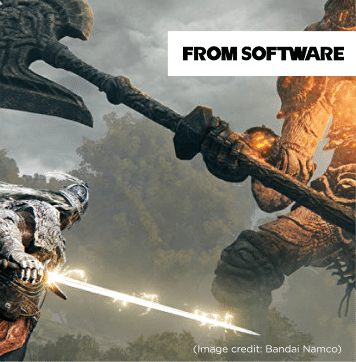
There were not many perfect products, and there were some products that increased false positives. We evaluated them quite carefully, among them, Digital.ai offered the fewest false positives.
Masanori Takeuchi
Senior Managing Director, FromSoftware
Built for Mobile Gaming

No Code Changes Required
Protect finished game builds without disrupting development workflows or release schedules.

Stronger Cheat Resistance
Help stop tampering, dynamic analysis, and other techniques used to enable cheating.

Harder to Reverse Engineer
Obscure sensitive game logic to make analysis and exploitation far more difficult.

Better Revenue Protection
Defend in-game purchases and economies from fraud, abuse, and unauthorized modification.

Insight Into Live Attacks
See how games are attacked in the wild and adapt protections accordingly.
We Are FIPS Validated
NIST FIPS 140-3 is the U.S. and Canadian government standard for validating the security of cryptographic modules. Certification confirms that encryption functions meet rigorous, independently tested requirements. For mobile gaming companies, this validation provides assurance that protected data, keys, and cryptographic operations meet trusted, regulator-recognized security benchmarks.
FIPS 140-3 is technically harmonized with ISO/IEC 19790, which defines international security requirements for cryptographic modules. In other words, FIPS 140-3 is the U.S./Canada adoption of the same core standard that ISO/IEC 19790 specifies globally.